
|
Chipping Village, Forest of Bowland, Lancashire.  Chipping is a village and civil parish of the borough of the Ribble Valley, Lancashire, England, within the Forest of Bowland Area of Outstanding Natural Beauty. |
|
The village is known to be at least 1,000 years old and is mentioned in the Domesday book. It lies on the south-western edge of the ancient Forest of Bowland next to the civil parish of Bowland-with-Leagram. |

|
Leagram Park, the site of one of the medieval deer parks of the Forest of Bowland, is a short drive from the village. |

|
The last survivor was Kirk Mill, the chair making factory of HJ Berry, but in 2010 the company went into administration. |

|
On the opposite corner to St Bartholomews Church is the Cobbled Corner Cafe, a welcome stop and rest for walkers and cyclists alike. |

|
|
|
(Filmed Monday 27th February 2023) |
|
St Bartholomew’s Church is the main church of Chipping Village. It is an active Anglican parish church in the deanery of Whalley, the archdeaconry of Blackburn, and the diocese of Blackburn.  The sandstone walls that surround the churchyard, and the nine three-sided steps leading from the street to the level of the churchyard are both Grade II Listed Structures. Click Here to see and read more information on St Bartholomew’s Church. |

|
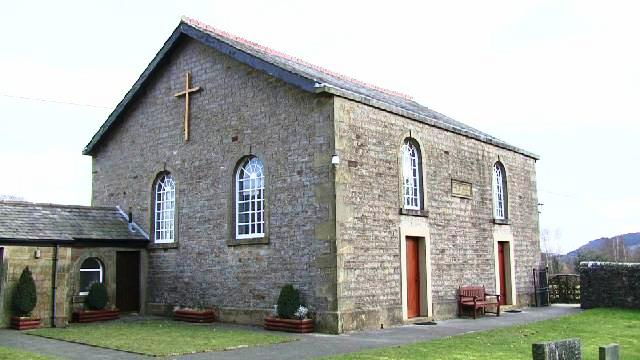
The chapel now known as the Congregational Church was built in 1838 for use as an independent non-conformist place of worship. Click Here to see and read more information on Chipping Congregational Church. |
|
A Roman Catholic church in stone with a slate roof. The sides are in five bays with semicircular-headed windows. Inside is a gallery containing an organ. Between the nave and the chancel are four large attached Corinthian columns. There are two similar columns between the chancel and the Lady chapel.
Built as a Roman Catholic school in sandstone with a hipped slate roof. It is in a single storey with a cellar at the northeast end. The door is in the southwest wall. Along the northwest wall are four sash windows under semicircular heads. |


|
Originating as three almshouses, these Grade II Listed buildings were later converted into two cottages. They are constructed in sandstone with stone slate roofs, and are in two storeys. 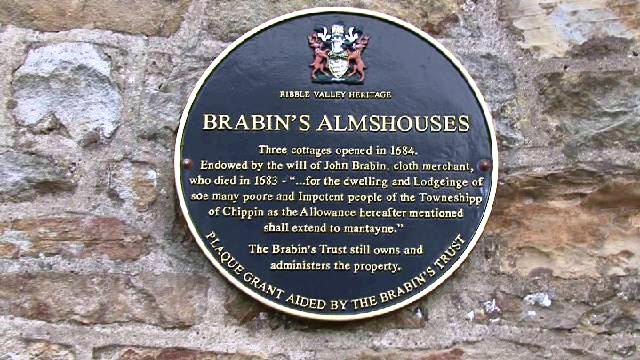 There are three doorways, and all the windows have two lights separated by a mullion. On the right side gable is a plaque inscribed with the name John Brabin and the date. |

|
The former school a Grade II Listed building is built in sandstone with a slate roof. It is in two storeys, the upper storey appearing to be very tall. 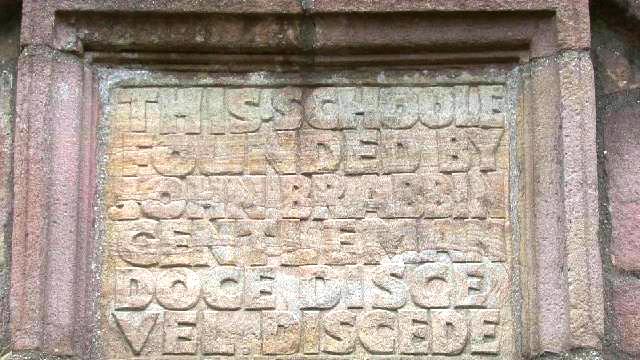 The building has a three-bay symmetrical front, with a central gabled porch, surmounted by three ball finials. Above the door is a lintel inscribed with initials and the date. 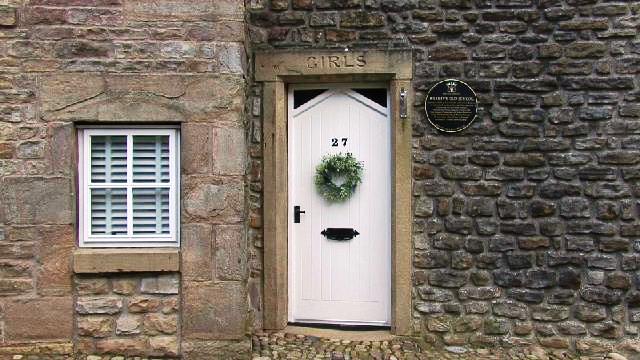 The photograph above is of the Old Schools Girls entrance and to the side of the door is a plaque, also carrying an inscription. 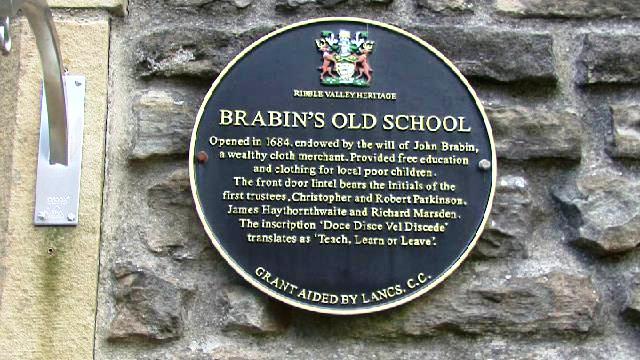 |

|
The main public house of Chipping Village is The Sun Inn. This historic village pub which is a Grade II Listed Building, offers good quality home cooked food and a fantastic range of award winning wines. |

|
|
||
(1 of 19) |
||
|
|
|
|
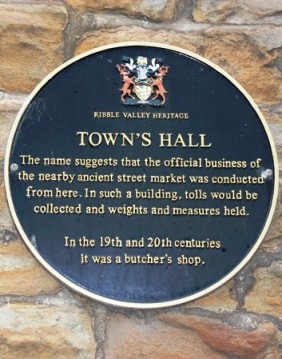
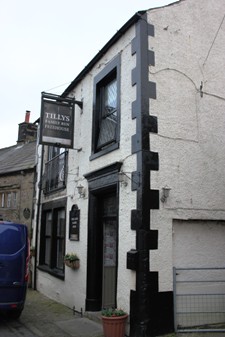
The name suggests that the official business of the nearby ancient street market was conducted from here. In such a building, tolls would be collected and weights and measures held. As stated on the plaque in the 19th and 20th centuries the building was a butcher’s shop. |

|
This Lancashire village has won several best-kept village competitions over the years. |
|
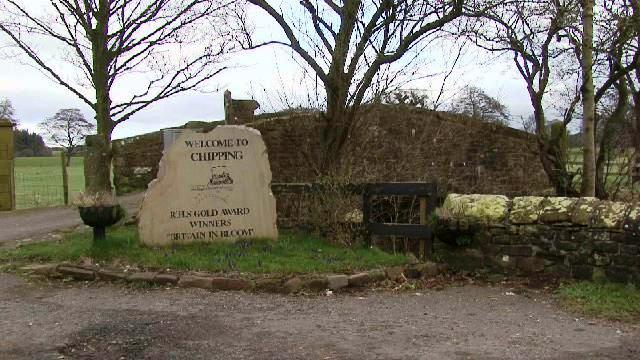
The village also won the village section of the Royal Horticultural Society Britain in Bloom competition in 2009 picking up RHS Tourism and Gold achievement awards in the process. |

|
Chipping really thrived during the Industrial Revolution when there were seven mills located along side Chipping Brook. |

Some More Images of Chipping Village (Photographed & filmed Monday 14th November 2022 & Monday 27th February 2023) |
|
|


